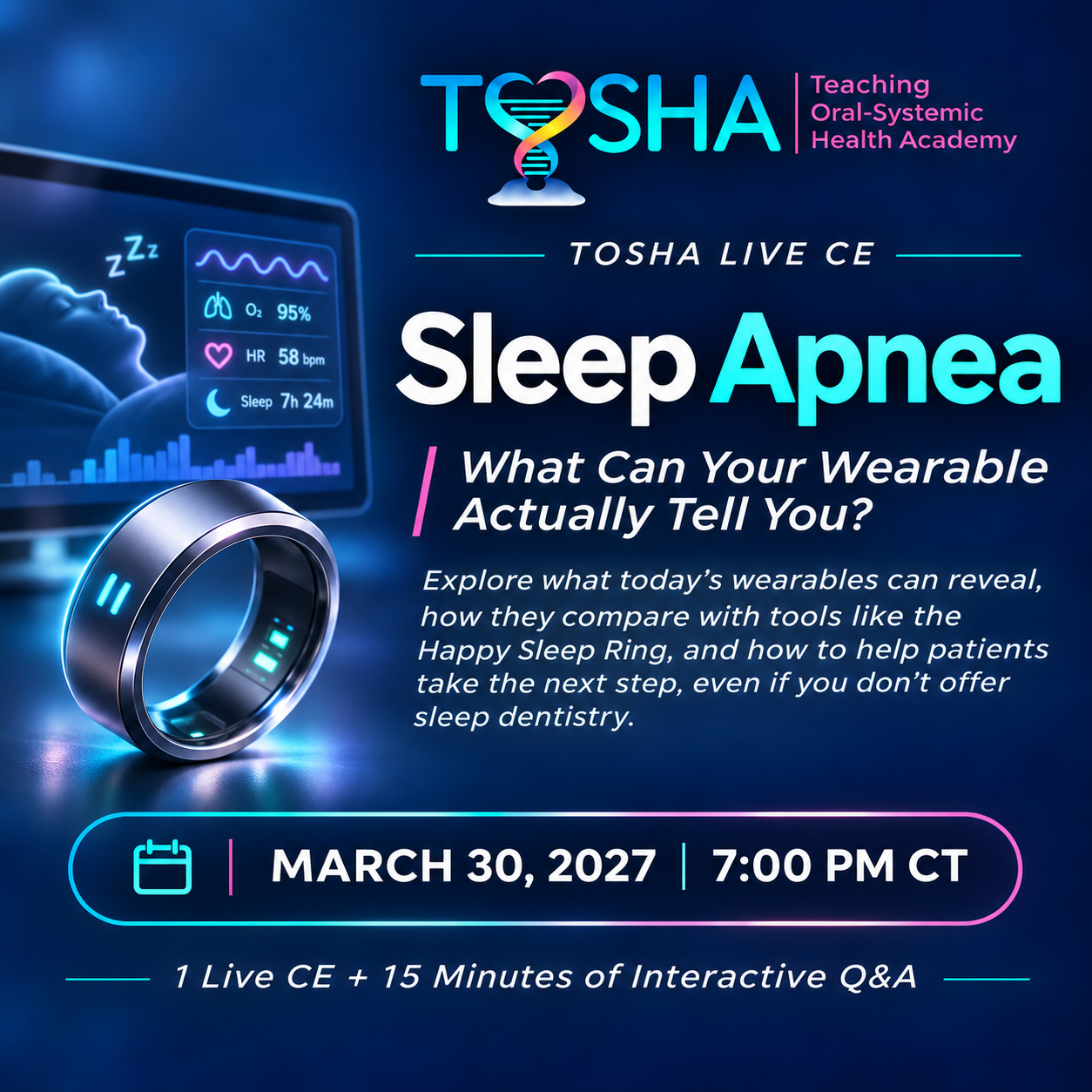
Your patient’s smartwatch says their oxygen dropped overnight. Their sleep ring reports disrupted sleep. But what does that information actually tell us?
Join Tosha Kozloski, RDH, & Crystal May as we explore the evolving world of sleep-disordered breathing, from consumer wearables to sleep screening technologies and diagnostic testing. Discover how devices such as the Happy Sleep Ring compare with other monitoring options, what their data can and cannot tell us, and how dental teams can recognize potential concerns and confidently guide patients toward appropriate evaluation.
You don't have to offer sleep dentistry to play an important role in identifying patients who may be at risk.
Learning Objectives
Upon completion of this course, participants will be able to:
Know what your patient's wearable is really telling you. Compare everyday wearables, sleep rings, and diagnostic sleep testing, including what their data can and cannot reveal.
Connect the mouth-body dots. Recognize oral findings that may raise questions about sleep-disordered breathing and understand where microscopy and salivary diagnostics fit into the broader oral-systemic health conversation, without treating them as sleep apnea tests.
Know what to say and what to do next. Turn concerning sleep data and patient symptoms into meaningful conversations, appropriate screening, and referrals, even if your practice doesn't offer sleep dentistry.
March 30, 2027 | 7:00 PM Central
1 Hour Live CE + 15 Minutes of Interactive Q&A